
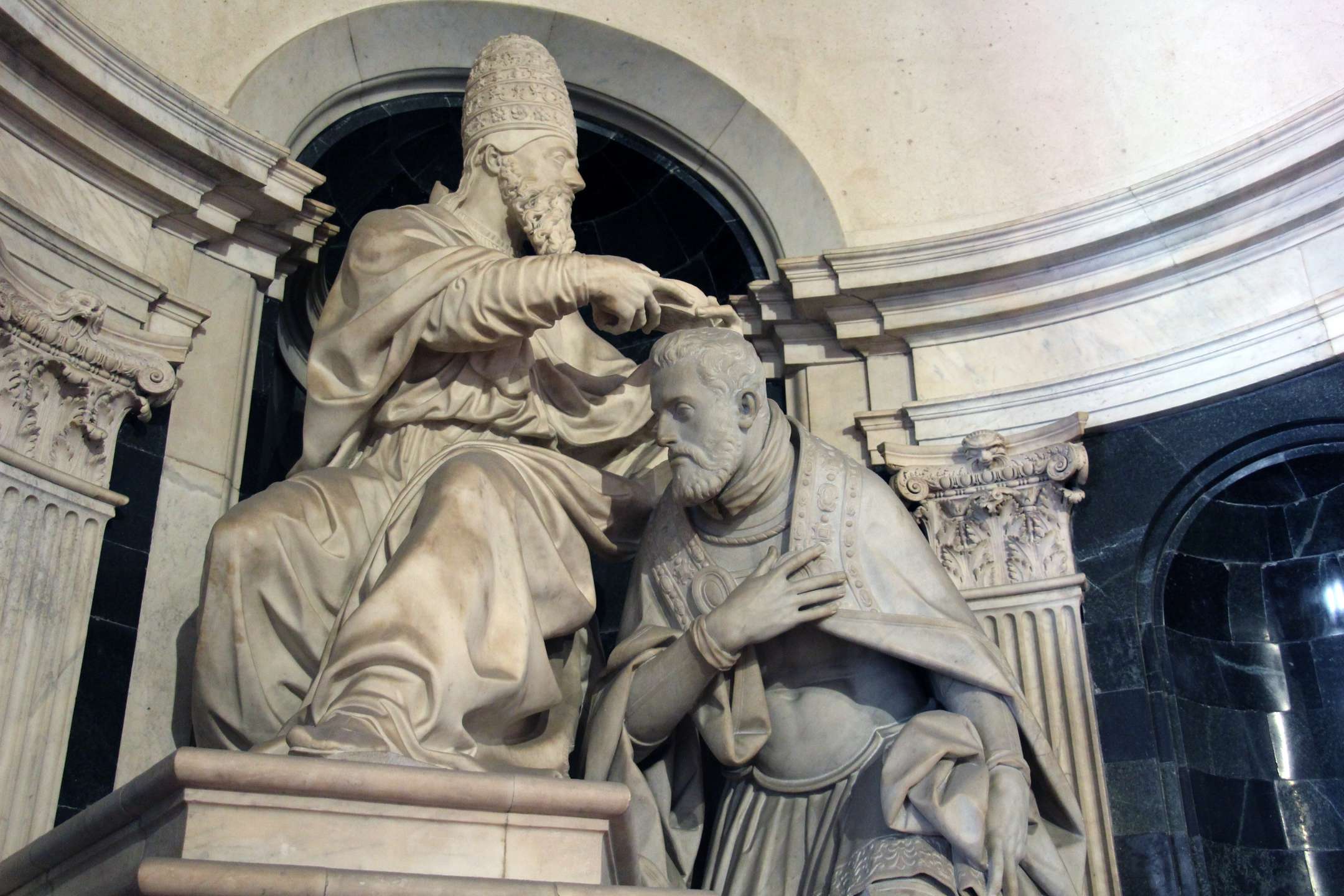


Statues of Palazzo Vecchio

Among the most popular Palazzo Vecchio statues, Michelangelo’s David is a standout. Situated inside the Hall of the Signoria, this iconic replica symbolises Florence’s strength and resilience. Carved from marble, David is depicted in a moment of calm before his battle with Goliath, embodying defiance against tyranny. The original sculpture is now preserved in the Accademia Gallery, while the replica continues to inspire.

Baccio Bandinelli's Hercules and Cacus, part of the impressive statues of Palazzo Vecchio, commands attention in Piazza della Signoria. This powerful sculpture portrays the legendary battle between Hercules and the fire-breathing giant, Cacus. The intense muscularity and dynamic composition reflect the Medici family's power, making it a compelling representation of Renaissance artistry.
Baccio Bandinelli's Hercules and Cacus, part of the impressive statues of Palazzo Vecchio, commands attention in Piazza della Signoria. This powerful sculpture portrays the legendary battle between Hercules and the fire-breathing giant, Cacus. The intense muscularity and dynamic composition reflect the Medici family's power, making it a compelling representation of Renaissance artistry.

Donatello’s Judith and Holofernes, another remarkable piece among the statues in Palazzo Vecchio, is located in the Sala dei Gigli. This bronze sculpture captures the intense moment when Judith triumphantly holds the severed head of Holofernes. Symbolising victory over tyranny, it reflects the political aspirations of Florence during the Renaissance. Donatello's attention to detail brings the tension and drama of the scene to life.

In the courtyard of the Palazzo Vecchio, you will find Benvenuto Cellini's Perseus with the Head of Medusa. This bronze statue depicts Perseus victoriously holding Medusa’s severed head, symbolising triumph over evil. The intricate details of the sculpture highlight Cellini’s ability to capture movement and emotion, making it one of the most admired Palazzo Vecchio statues. It also reflects the Medici family's pursuit of power and stability.

Michelangelo’s statues inside Palazzo Vecchio include the captivating Genius of Victory, located in the Sala dei Gigli. This marble sculpture features a dynamic male figure, representing the triumph and military prowess of the Renaissance. The detailed musculature and poised stance demonstrate Michelangelo’s genius in portraying the human form, aligning with the Medici family's aspirations for dominance in Florence.

Giambologna's Equestrian Monument of Cosimo I, a key piece among the statues of Palazzo Vecchio, stands prominently in Piazza della Signoria. This bronze statue depicts the first Grand Duke of Tuscany on a rearing horse, symbolising his authority and leadership. The monument captures the grandeur of Cosimo I and serves as a powerful reminder of the Medici dynasty’s lasting influence on Florence.
FAQ's
How extensive is the collection of statues at the Palazzo Vecchio?
The collection of statues in Palazzo Vecchio is vast, featuring works from various periods that enhance the palace's grandeur. It includes masterpieces like Michelangelo’s David, Bandinelli’s Hercules and Cacus, and Cellini’s Perseus with the Head of Medusa. These sculptures, scattered across halls and courtyards, reflect Florence's rich artistic and political legacy.
Which notable artworks can be found in the Palazzo Vecchio Statues Collection?
Notable artworks in the Palazzo Vecchio Statues Collection include Michelangelo’s David. Bandinelli’s Hercules and Cacus depicts a dramatic mythological battle, while Donatello’s Judith and Holofernes showcase triumph over tyranny. Other highlights include Cellini’s Perseus with the Head of Medusa and Giambologna’s Equestrian Monument of Cosimo I.
How long should I plan to spend exploring the Palazzo Vecchio Statues Collection?
You should plan to spend more than 1.5 hours exploring the Palazzo Vecchio Statues Collection. The extensive collection is spread across various halls and courtyards, each filled with masterpieces like Michelangelo’s David and Cellini’s Perseus with the Head of Medusa. Taking your time allows you to fully appreciate the artistic details and historical significance of each statue.
Are there any specific paintings in the Palazzo Vecchio Statues Collection?
While the Palazzo Vecchio Statues Collection primarily features sculptures, you will also find notable paintings throughout the palace. These include frescoes by Giorgio Vasari, particularly in the Salone dei Cinquecento. You can also find other Renaissance works that complement the statues, enriching your overall experience with a blend of different artistic mediums.
What are some notable antique sculptures in the Palazzo Vecchio Statues Collection?
The statues inside Palazzo Vecchio include notable antique sculptures that reflect the grandeur of ancient artistry. Highlights include Donatello’s Judith and Holofernes, symbolising victory over tyranny, and Michelangelo’s Genius of Victory, embodying triumph. These works, along with others like Bandinelli’s Hercules and Cacus, offer a glimpse into the artistic and political narratives that shaped Florence’s history.
How old is the Palazzo Vecchio's statues collection, and what historical significance?
The Palazzo Vecchio's statues collection spans centuries, with works dating from the 14th to the 16th centuries. These sculptures, created during the height of the Renaissance, hold immense historical significance. Commissioned by powerful figures like the Medici family, they symbolise Florence’s resilience, power, and cultural dominance. The collection reflects Florence's rich artistic heritage and its role in shaping Renaissance art.
Are there any special exhibitions or temporary displays related to the Palazzo Vecchio Statues Collection?
Yes, the Palazzo Vecchio occasionally hosts special exhibitions and temporary displays that complement its statue collection. These exhibitions often explore themes related to Renaissance art, showcasing additional works or offering deeper insights into the palace’s sculptures. Temporary displays may also feature rare or newly acquired pieces, providing visitors with unique opportunities to experience different aspects of Florence's artistic heritage.
What statues are displayed in front of the Palazzo Vecchio?
In front of the Palazzo Vecchio, you will find notable statues that define the grandeur of Piazza della Signoria. These include a replica of Michelangelo's David, symbolising Florence’s strength, and Bandinelli's Hercules and Cacus, depicting a mythological battle. Giambologna's Equestrian Monument of Cosimo I also stands prominently, representing Medici power. Together, these statues tell Florence’s rich artistic and political story.
What is the secret of Ponte Vecchio?
One secret of the Ponte Vecchio is the Vasari Corridor, an elevated passageway built in 1565 for Cosimo I de' Medici. It allowed the Medici family to move discreetly between the Palazzo Vecchio and Pitti Palace. Another mystery is its survival during WWII, as it was the only bridge in Florence spared by retreating Nazis, reportedly on Hitler’s orders.