


Palazzo Vecchio Artworks Collections

Palazzo Vecchio is home to an impressive collection of frescoes and murals that adorn its walls and ceilings. The Palazzo Vecchio artworks include Giorgio Vasari's renowned fresco "The Battle of Marciano," which dominates the Salone dei Cinquecento. These frescoes capture pivotal moments in Florentine history, celebrating the city's victories and reflecting the grandeur of the Renaissance era.

The sculptures and statues at Palazzo Vecchio are truly remarkable. Among the most iconic pieces is Michelangelo's "Victory," a marble masterpiece that embodies the power and grace of Renaissance art. Donatello's bronze sculpture, "Judith and Holofernes," located in the Sala dei Gigli, adds dramatic intensity, showcasing the artist’s talent for conveying emotion and narrative through sculpture.

The intricate artworks in Palazzo Vecchio include exquisite tapestries and textiles that depict historical and mythological scenes. These woven masterpieces reflect the rich craftsmanship of the Renaissance period. The tapestries also serve practical purposes, insulating the stone walls while enhancing the aesthetic appeal of the palace, blending function with beauty in a way that captures the essence of the era.

The Sala dei Gigli is a room filled with artistic treasures, most notably Donatello's "Judith and Holofernes." Named after the Florentine lily, the hall's frescoes depict historical and mythological scenes, immersing you in Florence’s rich cultural heritage. The intricate details and vivid colours transport you back in time, making this room a visual feast for art lovers.

The Palazzo Vecchio artworks also include a vast array of historical collections that provide insight into Florence’s past. These collections feature manuscripts, letters, and official documents that reveal the city’s political and cultural evolution. Artefacts like furniture and metalwork further enrich your understanding of Renaissance craftsmanship, offering a deeper connection to the lives of those who once inhabited the palace.

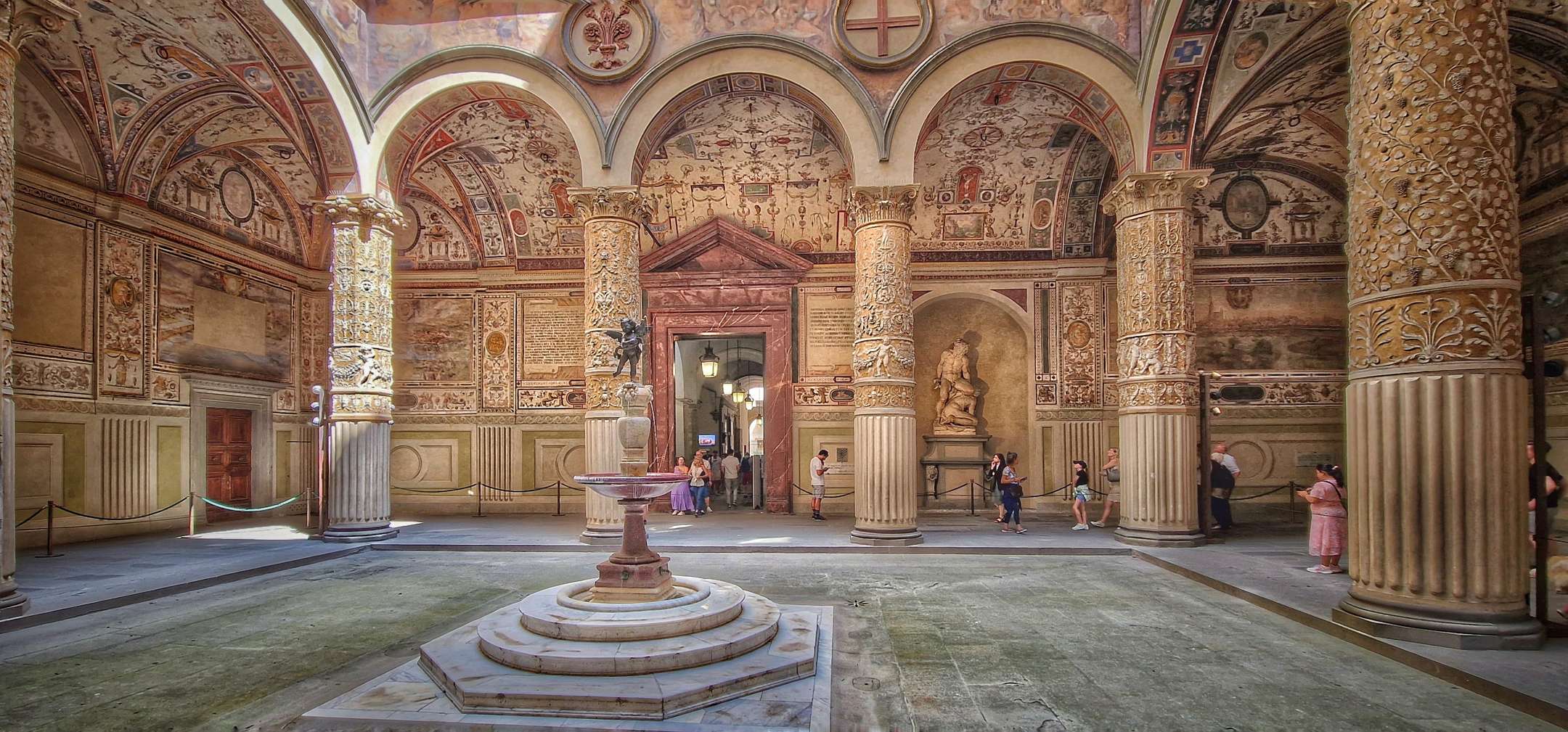
The courtyards of Palazzo Vecchio, particularly the Cortile di Michelozzo, are enchanting spaces where art and architecture meet. Surrounded by elegant arches and frescoed walls, these courtyards offer a tranquil escape within the palace. Sculptures, fountains, and greenery enhance the serene atmosphere, allowing you to appreciate the Renaissance emphasis on harmony and proportion.

The artworks in Palazzo Vecchio are complemented by a series of secret passages and hidden rooms that add a layer of intrigue. These concealed spaces were designed for privacy and security, allowing discreet movement within the palace. Exploring these passages, including the hidden Studiolo of Francesco I de’ Medici, offers an exciting glimpse into the secretive world of Renaissance politics.
.jpg?w=340&dpr=2)
Climbing the 95-metre-tall tower of Palazzo Vecchio rewards you with breathtaking panoramic views of Florence. From the top, you can see the Duomo, the Arno River, and the rolling Tuscan hills. The tower itself, a symbol of Florence's civic power, offers a memorable experience that combines adventure with stunning vistas of the city’s iconic landmarks.
Palazzo Vecchio Artwork Highlights

Standing at the entrance of the landmark, the colossal marble sculpture of Hercules and Cacus is one of the iconic Palazzo Vecchio artworks. Sculpted by Baccio Bandinelli in the 16th century, it depicts Hercules defeating the fire-breathing giant, Cacus. The work represents the triumph of good over evil, a fitting symbol of Florentine strength and virtue.

Inside the Sala dei Gigli, Donatello's bronze sculpture, Judith and Holofernes, captures a dramatic biblical moment. The 15th-century masterpiece shows Judith beheading the Assyrian general Holofernes, symbolising the triumph of virtue over tyranny. Donatello’s remarkable attention to detail and emotional intensity make this one of the most powerful artworks in Palazzo Vecchio.

One of the prominent artworks in Palazzo Vecchio is the fresco The Creation of Adam, painted by Vasari and Zuccari. Located in the Sala dei Cinquecento, it portrays the moment God breathes life into Adam. The fresco is part of a larger series celebrating biblical themes, reflecting Renaissance artistry through vivid imagery and dynamic composition.

Michelangelo’s The Genius of Victory, housed in the Salone dei Cinquecento, is a striking marble sculpture that symbolises triumph. The figure, with its powerful stance and intricate detailing, embodies Florence’s strength. This artwork is a testament to Michelangelo's mastery of the human form and remains a highlight within the palace's collection.

In the courtyard, you will find one of Andrea del Verrocchio’s delightful Palazzo Vecchio artworks, The Putto with Dolphin. This charming bronze sculpture, created in the 15th century, depicts a playful cherub riding a dolphin. It adds a touch of lightness to the palace’s collection, showcasing Verrocchio's skill in capturing movement and emotion in his work.
FAQ's
What are some famous artworks in Palazzo Vecchio?
Famous artworks in Palazzo Vecchio include Michelangelo’s The Genius of Victory, Donatello’s Judith and Holofernes, and Giorgio Vasari’s fresco The Battle of Marciano. Other notable pieces are The Putto with Dolphin by Andrea del Verrocchio and The Creation of Adam by Vasari and Zuccari, showcasing Florence's Renaissance artistry and history.
Are there any Leonardo da Vinci artworks in Palazzo Vecchio?
No, there are no original Leonardo da Vinci artworks in Palazzo Vecchio. However, the palace is historically linked to his unfinished mural "The Battle of Anghiari," which was lost. Some believe fragments of it may still exist beneath later frescoes in the Salone dei Cinquecento, adding intrigue to da Vinci's connection with the palace.
What is Palazzo Vecchio famous for?
Palazzo Vecchio is famous for being Florence's historic town hall and a symbol of political power during the Renaissance. It is renowned for its grand architecture, stunning frescoes by Giorgio Vasari, and significant artworks by masters like Michelangelo and Donatello. The palace also offers panoramic views from its tower, adding to its cultural and historical importance.
What famous statues are in Palazzo Vecchio?
Famous statues in Palazzo Vecchio include Michelangelo’s The Genius of Victory, a powerful symbol of triumph, and Donatello’s Judith and Holofernes, depicting a dramatic biblical moment. Also notable is Hercules and Cacus by Baccio Bandinelli, positioned at the entrance, and The Putto with Dolphin by Andrea del Verrocchio, adding a playful touch in the courtyard.
What is the hall of 500 in Palazzo Vecchio?
The Hall of the Five Hundred, or Salone dei Cinquecento, is the largest room in Palazzo Vecchio, designed to hold Florence’s Grand Council. Commissioned in 1494 and later renovated by Giorgio Vasari, it features stunning frescoes depicting Florentine victories and Medici achievements. The hall's grandeur reflects Florence’s political power during the Renaissance and continues to host important events today.
What two styles was the Palazzo Vecchio built in?
Palazzo Vecchio was built in a combination of Gothic and Renaissance styles. The Gothic influence is evident in its fortress-like structure, thick walls, and crenellated battlements, designed by Arnolfo di Cambio in the late 13th century. Renaissance elements were later added by Giorgio Vasari, incorporating classical motifs, symmetry, and elaborate interior decorations, blending medieval strength with Renaissance elegance.
What are some artworks in Palazzo Vecchio by Michelangelo?
In Palazzo Vecchio, Michelangelo's notable artworks include The Genius of Victory, a marble sculpture symbolising triumph, located in the Salone dei Cinquecento. Additionally, Michelangelo’s unfinished project for the Battle of Cascina, intended for the same hall, reflects his influence on the palace, though the original artwork was never completed. These works highlight his mastery of form and expression.